
Dividing cannabis strains solely into indica and sativa no longer corresponds to the scientific understanding we have of this plant. The effect of cannabis is closely related to its terpene content, the aromatic compounds that create its typical aroma. The scent of the cannabis plant can therefore tell us more about its effects than its genetic origin.
Although all cannabis plants are genetically related and belong to one species, we commonly speak of different varieties or strains. These differ from one another in appearance, growth rate or flowering time, as well as in chemical composition. A more precise term for chemically distinct cannabis plants is chemovar. Different chemovars differ in their cannabinoid content, but also in terpenes and other aromatic compounds that give cannabis its typical scent. That is why different cannabis strains can smell completely different.
Current research and consumer experience suggest that the effect of cannabis cannot be explained by cannabinoids alone. Terpenes and other cannabis metabolites probably also play a part, acting synergistically with cannabinoids. The term entourage effect has become established for this phenomenon, and it is probably the reason why some strains are heavy and grounding, while others are fresh and uplifting.
Terpenes can, for example, alter the permeability of the blood-brain barrier, modulate pain perception or influence mood and anxiety. The same dose of cannabinoids can therefore feel calming in one chemovar, or slightly stimulating in another, depending on which terpenes accompany it and in what proportion they are present.
The marketing labels indica and sativa certainly cannot capture this diversity. To help you make sense of the palette of cannabis flavours and effects, we have sorted cannabis strains into several basic terpene families that you may commonly encounter.
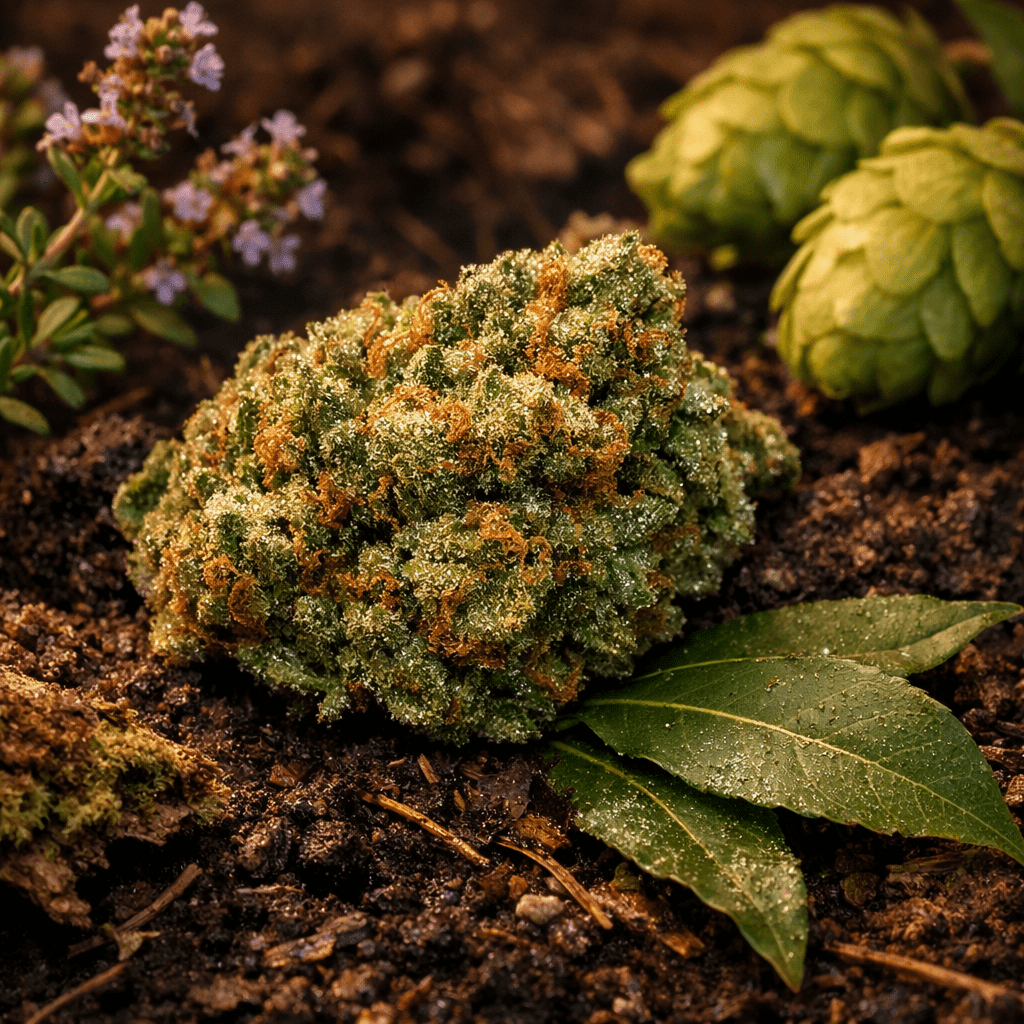 Earthy herbal strains (myrcene)
Myrcene is among the most common terpenes found in cannabis, and its scent forms the basis of the typical cannabis aroma. Myrcene smells like damp earth with herbal undertones of hops, thyme and bay leaf. Besides cannabis, this terpene can be found in mango, cloves or lemongrass, for example.
Cannabis with a high myrcene content smells strongly musky after drying and has the typical odour associated with “old school” strains. These include classics such as Skunk #1 and Granddaddy Purple or the newer Blue Dream, as well as most classic Afghan landrace genetics. The smoke profile of these strains is usually heavier, with a warm to grounding character. On the inhale, light fruity or spicy undertones may sometimes appear, but the body is always strongly earthy with herbal notes.
In specialist literature, myrcene is mentioned as a terpene with potentially relaxing and analgesic effects, which may complement cannabinoids. Earthy herbal strains typically have a calming effect associated with bodily relaxation and rest.
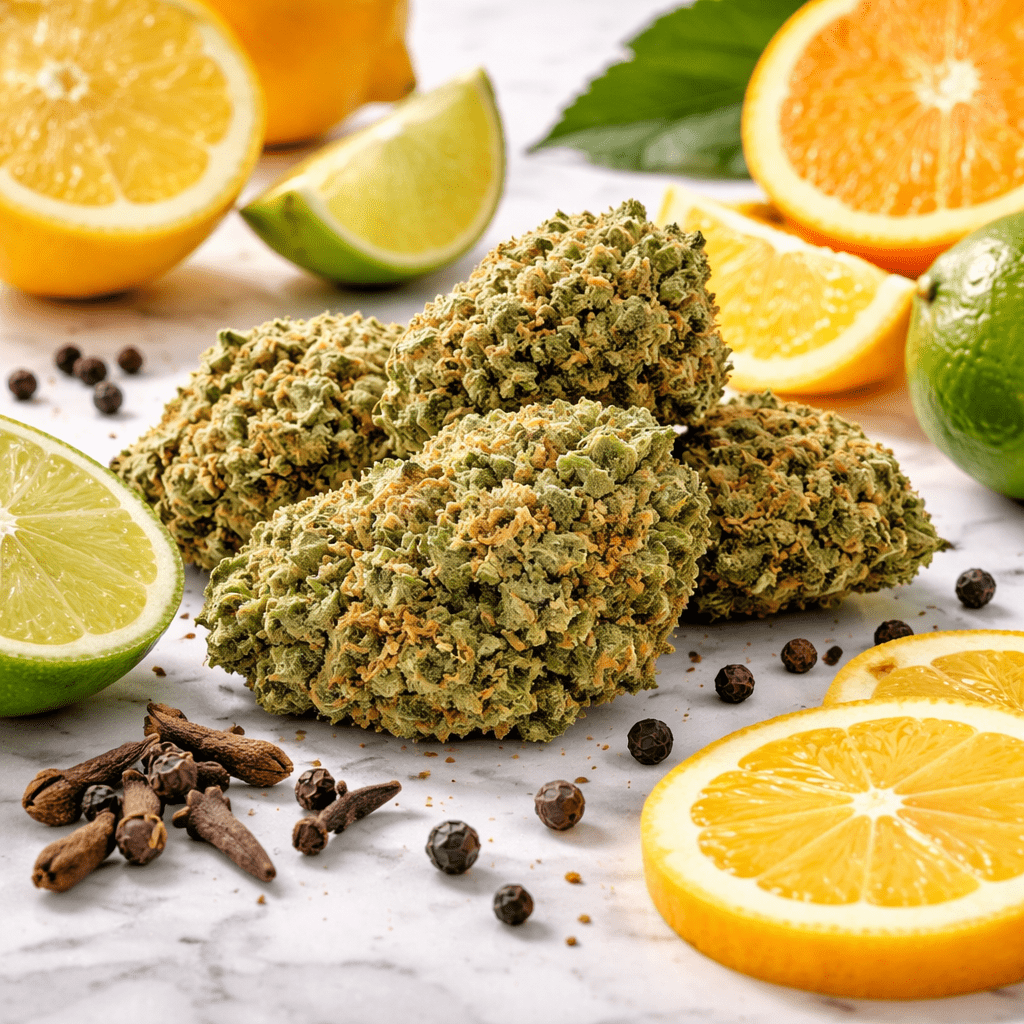 Citrus-spicy strains (limonene + caryophyllene)
Limonene is a terpene present in citrus peels and gives cannabis strains the scent of lemon, orange and lime. Caryophyllene is a sesquiterpene (that is, a terpene made up of three isoprene units) with a typical spicy to woody scent, found in abundance not only in cannabis, but also in black pepper and cloves, for example.
The citrus-spicy combination is among the most sought-after terpene profiles. Typical examples are Super Lemon Haze or Lemon Skunk and other strains from the Lemon family. Citrus-spicy strains can also include Durban Poison or some fruitier cultivars from the Cookies line. Strains with a higher caryophyllene content are often characterised by a pungent smoke that makes you want to sneeze. Limonene may present as a fresh citrus scent, but it can also smell like sweet candied lemons, as is the case with some phenotypes of Amnesia Haze.
Preclinical studies describe limonene’s potential influence on mood and pain perception, and it is attributed anxiolytic and anti-stress effects. Caryophyllene is among the pharmacologically significant terpenes because it is a CB2 receptor agonist and can therefore significantly influence inflammation, pain and the immune response in a similar way to cannabinoids, but without a psychoactive effect.
 Cookies and other dessert strains (β-caryophyllene + humulene, linalool)
The terpene profile of the Cookies line is usually based on caryophyllene complemented by humulene, a terpene with a mildly spicy woody scent found, for example, in hops. Linalool, which has a sweet floral aroma, and limonene, which gives fruity notes, are also often present in dessert strains.
Strains from the Cookies family are characterised by a complex terpene profile and can differ greatly from one another. Original representatives of the family, such as Thin Mint Cookies, Girl Scout Cookies or Wedding Cake, strongly resemble sweet pastries. At the other end of the spectrum are more modern strains from the Cookies line with fruitier notes, such as Tropical Fruit Cake or Mandarin Cookies. Cookies and all related strains are typified by a dense smoke that literally fills the mouth with a pronounced sweet taste.
The combination of terpenes in strains from the Cookies family is associated with a calming and sedative effect. Linalool, which is often present, is well known in aromatherapy, where it is used for its soothing and relaxing effects. As the name suggests, dessert strains are used by many people as a sweet finish after a demanding day.
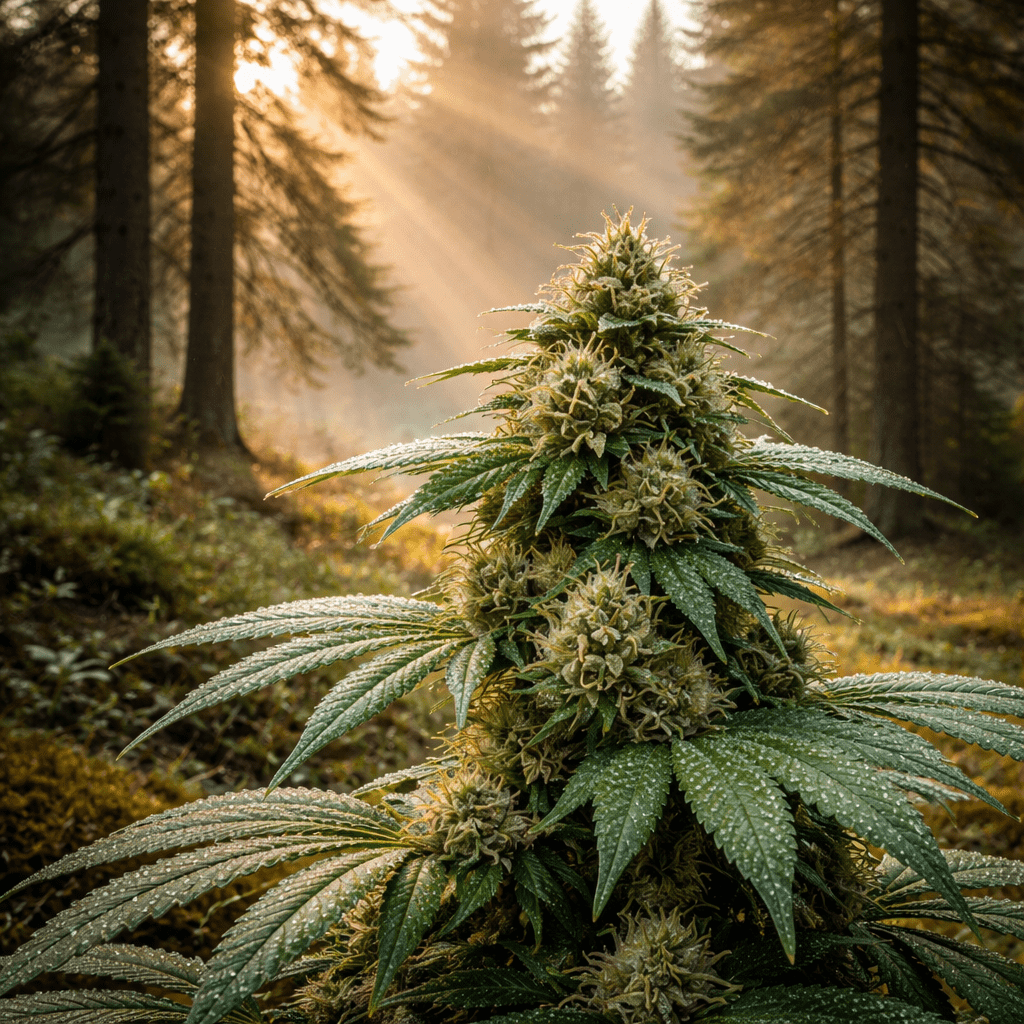 Clear head (α- and β-pinene)
Alpha and beta pinene are terpenes with the scent of pine needles, resin and sometimes eucalyptus undertones. Besides cannabis, they can be found in conifers, rosemary or basil.
The aroma of strains with a high pinene content is usually sharp, with a pronounced scent of coniferous forest and air after rain. Typical representatives of this family are G13 Haze, Jack Herer and Super Silver Haze, all of which have a distinct resinous scent with “dry” smoke. Strains with a high pinene content can include Arjan’s Strawberry Haze or Pineapple Express, which have a somewhat sweeter terpene profile.
Pinene is being studied in specialist research for possible neuroprotective and anti-inflammatory effects. In aromatherapy, coniferous terpenes are associated with cleansing and clarifying effects. Similarly, strains with a high pinene content may induce feelings of alertness and focus.
 Herbal strains (terpinolene)
In cannabis, terpinolene is associated with herbal, floral and resinous notes that together create a scent as if you had opened a window into a spring garden. This terpene is also found in tea tree, sage or nutmeg, for example.
Strains of the Haze type are especially characterised by a high terpinolene content. We can also include many classics from Amsterdam coffeeshops in the herbal strain category, such as Jack Herer, Trainwreck or AK-47, which typically have a “green” aroma reminiscent of a freshly cut garden.
The effects of terpinolene-rich strains are often described as balanced, that is, calming and mildly euphoric without a strong body effect. We still know little about the pharmacological action of terpinolene, but it has been studied for possible sedative effects, and more recent work discusses the potential effects of terpinolene in chemotherapy-induced neuropathic pain.
Research in recent years clearly shows that the simple division of cannabis into sativa and indica by no means captures the breadth of its effects. Our terpene families are intended to help you orient yourself better and choose strains more consciously. However, remember that this is a simplifying framework and no classification can encompass all possible combinations of terpenes and cannabinoids or the possible individual reactions of users.
Sources:
Sommano, S., Chittasupho, C., Ruksiriwanich, W., & Jantrawut, P. (2020). The Cannabis Terpenes. Molecules, 25. https://doi.org/10.3390/molecules25245792.