
Cancer is the second most common cause of death after cardiovascular diseases. Although medicine has made incredible progress in treatment over recent decades, it cannot always help oncology patients. Can cannabis do so?
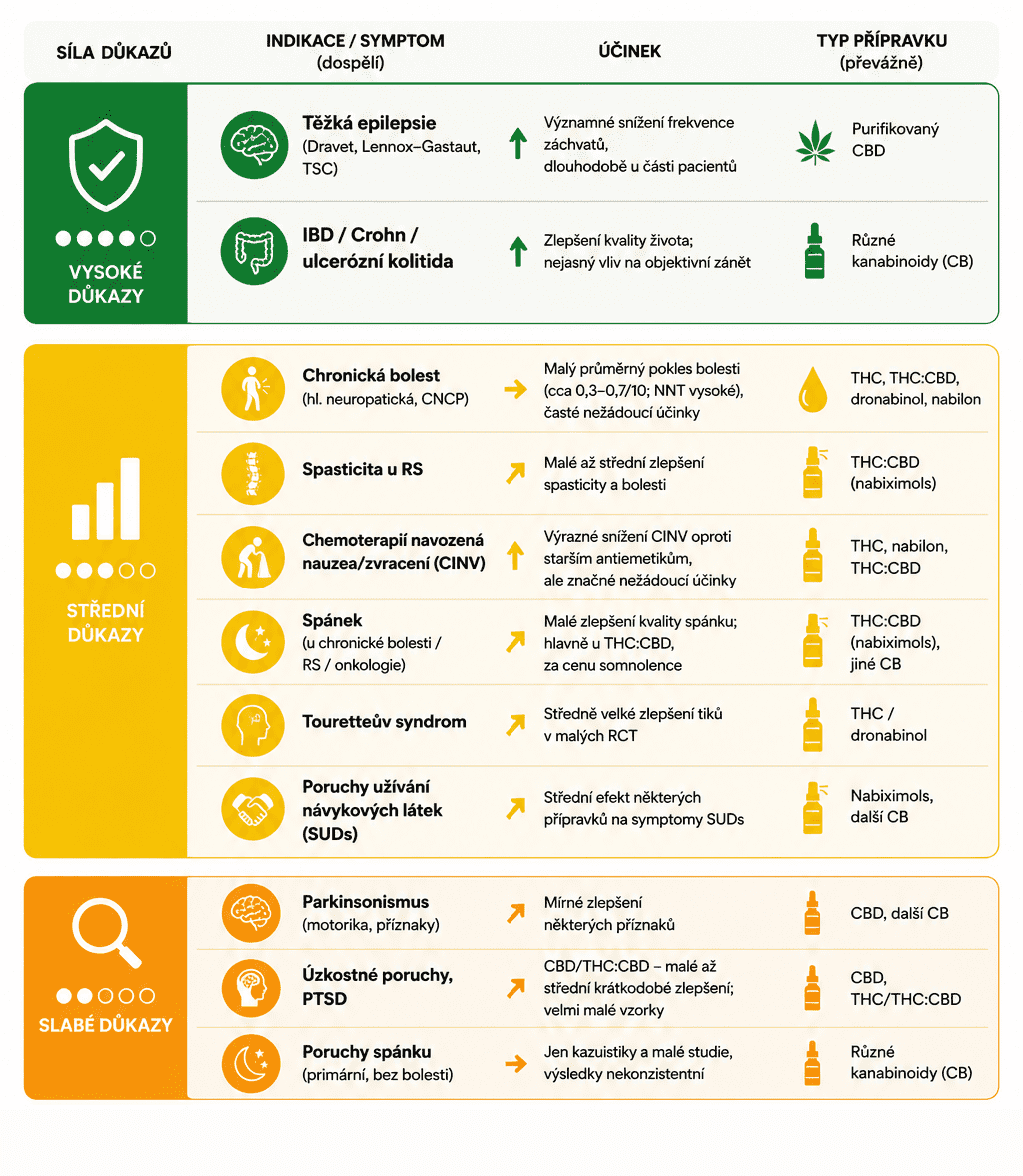
If you ask medical and scientific experts specialising in oncology whether they consider cannabis a reliable medicine for patients with cancer, most of them will answer no. The main reason is that we currently do not have enough high-quality clinical evidence confirming that cannabis or individual cannabinoids can reliably cure cancer or stop its growth. On the other hand, there is evidence that cannabis may be an effective supportive treatment that helps manage nausea and vomiting after chemotherapy, suppress pain and generally improve the quality of life of people affected by cancer.
The endocannabinoid system and tumour diseases
 Our body is interwoven with a network of receptors belonging to the endocannabinoid system, which maintains homeostasis, or the body’s internal balance. The ECS influences, for example, the perception of pain, immunity, sleep, metabolism and other processes, including those related to the development of tumours.
The CB₁ and CB₂ receptors of the endocannabinoid system also influence apoptosis, which is programmed cell death. During apoptosis, a cell breaks down into smaller parts, which are then engulfed by white blood cells. If this process is disrupted, the damaged cell survives, begins to reproduce and tumour growth develops.
Scientists have discovered that the body’s own cannabinoid anandamide increases apoptosis in tumour cells, thereby contributing to their healthy breakdown. It has also been shown that activating CB₁ and CB₂ receptors in tumour tissue slows the formation of blood vessels in tumours and therefore their growth. Scientific studies also suggest that the endocannabinoid system influences the division of tumour cells.
The effects of THC and CBD on cancer
The main obstacle to recognising cannabis as a treatment for cancer is the fact that only a small number of studies have so far been conducted on humans. Most scientific research to date has been carried out in vitro (in a test tube) or in vivo (on animals). This is also why the official position of doctors remains rather sceptical.
The effects of cannabis on symptoms associated with cancer treatment and the disease itself are somewhat better documented. The main symptoms include nausea, vomiting, pain, loss of appetite and sleep disorders. Medicinal products containing cannabinoids (Dronabinol, Nabilone) or medicinal cannabis in various forms (vaporisation, ointments, suppositories, extracts) are used to suppress these problems.
However, it is important to realise that in these cases cannabis is only a supplement to standard treatment and should be used only after consulting the treating doctor. Otherwise, there is a risk of dangerous drug interactions or a deterioration in the patient’s condition. CBD and THC may increase the toxicity of conventional cytostatics, targeted medicines or opioids.
Which cannabis varieties and products made from them are used during cancer treatment?
In the world of medicinal cannabis, cannabis varieties are divided into three main types:
- Type I (THC-dominant): These cultivars contain high concentrations of psychoactive THC and minimal CBD, and in clinical practice they are the most frequently prescribed type of variety for oncology patients.
- Type II (balanced THC-to-CBD ratio): A mixture of THC and CBD in a ratio of approximately 1:1 is intended to reduce the psychotropic effects of THC.
- Type III (CBD-dominant): Cultivars with a high CBD content and minimal amounts of THC do not produce psychoactive effects.
You may be interested in: Guide to choosing varieties
When selecting cannabis products, doctors prefer standardised extracts rather than cannabis flowers. The most common include:
- Synthetic THC capsules (Dronabinol, Nabilone)
- Oromucosal spray (THC:CBD 1:1) (Sativex, Nabiximols)
- Highly purified CBD extract (Epidiolex – oral solution)
- Sublingual magistraliter oils (standardised drops – various ratios)
- Inhaled dried material (flowers) (standardised medicinal dried material)
Frequently asked questions about cannabis and cancer
Does cannabis kill cancer cells?
In animal studies, THC, CBD and other cannabinoids affected the viability of tumour cells. However, this does not prove that cannabis can cure cancer in humans. Clinical studies on humans are needed to confirm its efficacy and safety.
Does cannabis help during chemotherapy?
In some cases, cannabis or products made from it may help with nausea and vomiting accompanying chemotherapy. However, a doctor must decide whether they are appropriate.
Can cannabis extract or oil cure cancer?
Cannabis extracts (RSO, Phoenix Tears) and oils are often mentioned in anecdotal stories about curing cancer with cannabis. Although many of these stories may sound convincing, products promoted as substitutes for cancer treatment must be approached with the utmost caution. Another danger of potent extracts and homemade extracts is the high risk of toxicity due to impurities.
Is it safe to use cannabis during cancer treatment?
Without prior consultation with a doctor, cannabis use during cancer treatment cannot be considered safe. There is a risk of serious drug interactions and other side effects.
For further information about the medicinal effects, history and varieties of cannabis, visit the HiSeeds blog.
Warning: This article is intended for informational and educational purposes and does not replace professional medical care. If you are considering using cannabis or cannabinoids during cancer treatment, consult your treating doctor.
Sources:
Martin Helcman (2026). The endocannabinoid system and cancer. Konopí Magazine. https://magazin-konopi.cz/endokanabinoidni-soustava-a-rakovina/
Braun, I. M., Bohlke, K., Abrams, D. I., Anderson, H. M., Balneaves, L. G., Bar-Sela, G., Bowles, D. W., Chai, P., Damani, A., Gupta, A., Hallmeyer, S., Subbiah, I., Twelves, C., Wallace, M. S., & Roeland, E. (2024). Cannabis and Cannabinoids in Adults With Cancer: ASCO Guideline. Journal of clinical oncology : official journal of the American Society of Clinical Oncology, 42, 1575 - 1593. https://doi.org/10.1200/jco.23.02596
Safran, E., Safran, H., & Kim, S. (2026). Cannabinoids in oncology: pharmacology, clinical applications, and translational perspectives. Frontiers in Pharmacology, 17. https://doi.org/10.3389/fphar.2026.1969657