
There may be many reasons to grow cannabis, but most people embark on this noble activity for the unique compounds contained in this plant. The best known and most sought-after are undoubtedly cannabinoids, but they are far from the only ones. What are the most important substances in cannabis, and what does science say about them?
To date, more than 500 compounds have been identified in cannabis – including more than a hundred phytocannabinoids (cannabinoids of natural origin), over one hundred different terpenes, more than thirty flavonoids, phenols, alkaloids and other substances. Different cannabis strains have a specific composition of these substances and can therefore differ significantly from one another.
What cannabinoids are found in cannabis
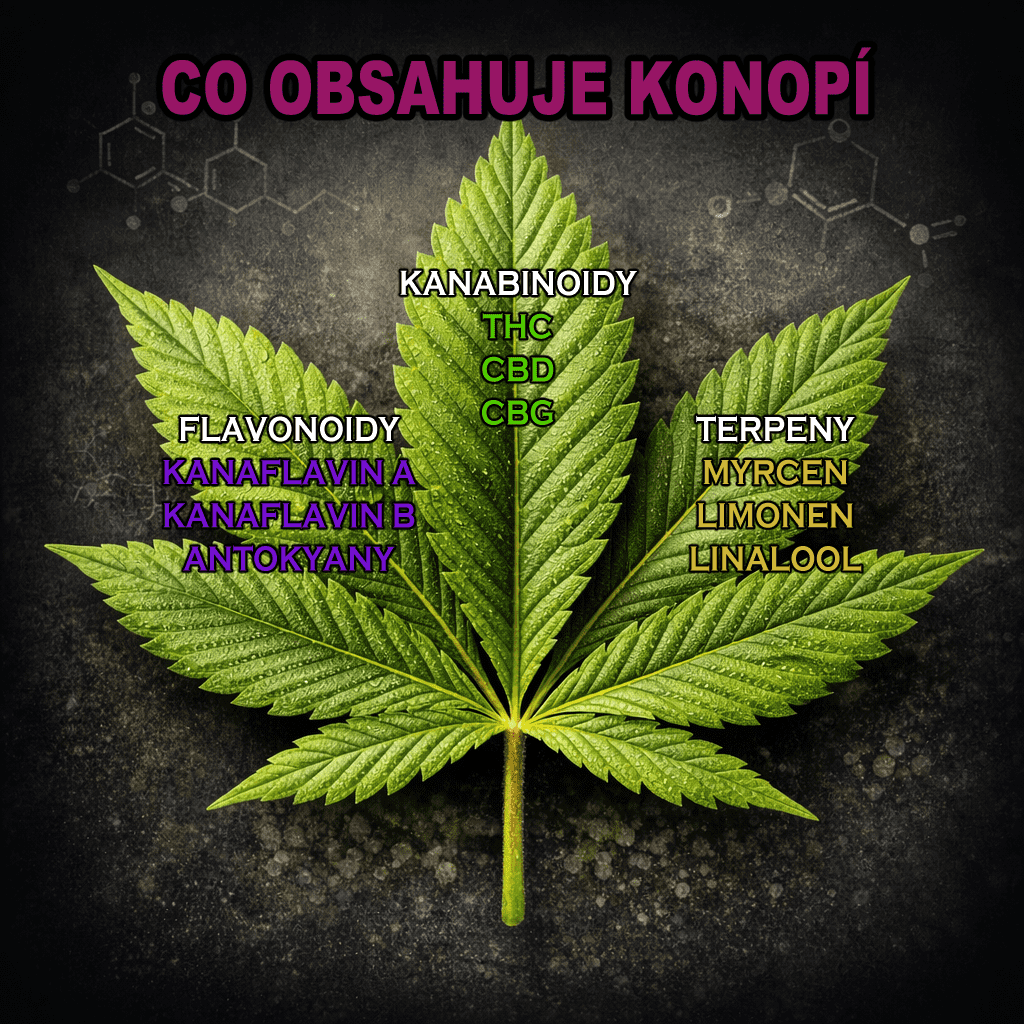 Cannabinoids were named after cannabis (Latin Cannabis), because they occur in nature mainly in this plant. However, in smaller amounts we can also find them in other species, such as intoxicating pepper or echinacea. Cannabinoids act on the receptors of the endocannabinoid system (CB₁ and CB₂) in our body. CB₁ receptors are found mainly in the brain and nervous system, and influence mood, memory and pain perception. CB₂ receptors regulate the immune response and inflammatory reactions. It is precisely the action of cannabinoids on ECS receptors that is responsible for a range of cannabis effects on the human body.
The two cannabinoids found in the greatest amounts in cannabis are THC and CBD. Tetrahydrocannabinol (THC) has psychoactive effects, suppresses pain and is attributed other significant medicinal properties. Cannabidiol (CBD) does not have an intoxicating effect and it has been shown to be effective against epileptic seizures and anxiety.
Other cannabinoids (CBG, CBN, CBC and others) are called minor or rare because they occur in cannabis in smaller amounts. This does not mean, however, that they are less valuable. Although our current knowledge of the pharmacology of minor cannabinoids is limited, a number of clinical studies suggest that they could be beneficial in the treatment of a range of diseases, for example neuropathic pain, neurodegenerative diseases, epilepsy, cancer and skin conditions.
What terpenes and terpenoids are found in cannabis
Terpenes are compounds that are an essential part of plant essential oils. These volatile substances are responsible for the characteristic scent of many plants. Terpenoids are formed by the oxidation of terpenes and are somewhat less volatile and often have more complex flavours and aroma.
If a strain smells of citrus, it is thanks to the limonene content, which we find in cannabis and in lemon peel. Similarly, cannabis may contain pinene (conifer resin), linalool (lavender) and more than a hundred other terpenes. In addition to cannabinoid content, the unique composition of terpenes is what distinguishes different strains from one another.
According to studies, terpenes show synergistic action with cannabinoids, which we call the “entourage effect”. For example, sedative effects have been demonstrated for myrcene (mango, basil, lemongrass). Also therapeutically valuable is beta-caryophyllene, which has earned the designation cannabimimetic thanks to its ability to bind to the CB₂ receptor, that is, a substance with effects mimicking cannabinoids.
What flavonoids are found in cannabis
Flavonoids are often overlooked components of cannabis and occur throughout the plant kingdom. These compounds give colour to blackberries, blackcurrants or red cabbage, and their name was derived from the Latin word flavus – yellow.
As in other plants, flavonoids influence the pigmentation of cannabis. The deep purple colour of some strains is caused by flavonoids called anthocyanins. Unique to cannabis are two flavonoids – canflavin A and canflavin B, which show antiproliferative activity and are the subject of scientific research. Other flavonoids naturally occurring in cannabis are quercetin, apigenin or kaempferol.
What alkaloids are found in cannabis
Two spermidine alkaloids have been identified in cannabis. In 1975, the first of them – cannabisativine – was isolated from cannabis roots. Later, the same compound was obtained from the dry leaves and stems of a Thai strain. One year after the discovery of cannabisativine, the second spermidine alkaloid, namely anhydrocannabisativine, was isolated from the dry leaves and small stems of a Mexican strain grown in Mississippi.
In addition to the substances mentioned above, 42 non-cannabinoid phenols have been identified in cannabis plants. In nature, these compounds are produced by plants and microorganisms, sometimes in response to attack by pathogens, insects, UV radiation or injury. Since phenols occur in foods and plants used in the traditional medicine of many cultures, their effects on the human body are the subject of scientific research.
You can find further verified information about cannabis and tips for growers and seed collectors on the HiSeeds blog.